A featured contribution from Leadership Perspectives, a curated forum for technology leaders, nominated by our subscribers and vetted by the Applied Technology Review Editorial Board.

Jocko Fuel
Modern Finance Leadership For High Growth Organizations
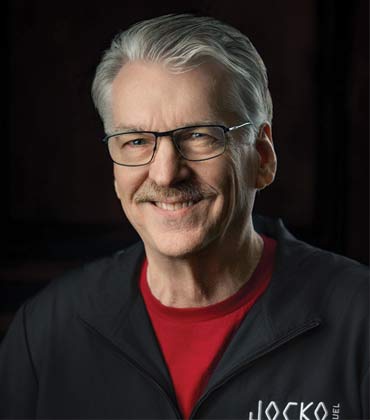
Don Miller
Don Miller is a seasoned financial executive with extensive experience across beverage, manufacturing, software, telecom, financial services, consulting, and nonprofit sectors. He has led initiatives spanning firm start-ups, M&A, SaaS and ERP implementation, financial planning, cash management, regulatory oversight, and operational strategy. As CFO of Jocko Fuel, he is building the company’s financial infrastructure and funding strategy to support growth.
AN UNCONVENTIONAL PATH TO CFO
When people ask how I became Chief Financial Officer at Jocko Fuel, I usually tell them the story starts at a moment when most people think their careers are winding down.
In 2019, I was 58 years old. I had spent more than four decades working across industries, from beverages and telecom to software, consulting, and private equity-backed companies. I had helped organizations scale, navigate complex financial transitions, and build disciplined financial operations. Yet at that point, I had stepped away from an executive role after a demanding stretch that left me burned out.
I’m the kind of person who tends to go all in or not at all. At that time, I did not feel I could give 100 percent to another company. So I paused. During that period, I also discovered something about myself: I love what I do. Finance is not just a profession to me. It is a way of thinking, problem solving, and building organizations.
About a year and a half later, while living on Cape Cod, I came across a short job posting for a Chief Financial Officer role at a company called Origin in Farmington, Maine. I was intrigued, though the location alone made the opportunity unusual. Farmington was a five-and-a-half-hour drive away. I applied anyway.
There were more than 200 applicants for the role, and after a screening process, I was invited to speak with the founder, Pete Roberts. Midway through that conversation, I paused and made an unusual suggestion.
I told him that any one of the candidates could probably perform the technical aspects of the job. But technical skills were not what mattered most. Instead, I suggested that I spend a week working alongside him, with no money changing hands, so we could determine whether we trusted each other and whether our working styles aligned.
“Scaling a company is a bit like playing three-dimensional chess. Every decision involves multiple time horizons and competing priorities involving customers, shareholders, employees, and founders. The CFO’s role is to balance those priorities while maintaining transparency and trust across the organization.”
To Pete’s credit, he agreed immediately. The next day, I drove five and a half hours to Maine just to have lunch with him. A few weeks later, I returned for that weeklong trial. By the end of the first day, we were already discussing how to make the partnership work. That moment changed the trajectory of the next chapter of my career.
A STARTUP WITH BIG AMBITIONS
At the time, Origin was still very much a startup. The company had begun as a manufacturer of Brazilian jiu-jitsu gear with a mission to bring textile manufacturing back to the United States. Pete had bold ambitions, including expanding into apparel, footwear, and other product categories. Within that broader organization was a smaller nutritional division that would eventually evolve into Jocko Fuel.
The brand is named after Jocko Willink, a former Navy SEAL who built a global reputation as a leadership thinker and advocate for discipline, ownership, and personal accountability. His philosophy is rooted in the idea that people should fuel their bodies with the same intentionality they bring to training and leadership.
The market for energy drinks and protein products is crowded, but much of it is dominated by products loaded with sugar, artificial ingredients, or excessive stimulants. The vision behind Jocko Fuel was simple: provide healthier alternatives without compromising on quality.
When I joined, the business was still small. In fact, when I first arrived, the accounting system was essentially being maintained by a part-time bookkeeper who periodically reconstructed financial statements from bank records. My first assignment was to prepare the company’s financial statements for two years of audited reporting.
For about a month, I practically slept in the office. I reconstructed thousands of transactions, adjusted journal entries, and brought the books into a condition that could withstand external scrutiny. When the audit was complete, the statements passed with flying colors. That experience set the tone for how we would build the financial discipline of the organization.
GROWTH AT AN UNUSUAL SCALE
Since those early days, Jocko Fuel has experienced extraordinary growth. Over a five- to six-year period, our revenue has expanded more than twenty-three times, roughly a 2,200 percent increase.
Growth at that speed can easily overwhelm organizations. Systems strain. Processes break. Financial discipline often erodes under the pressure to scale. One of my primary responsibilities as CFO has been to ensure that growth remains structurally sound rather than superficially impressive.
In many companies, metrics like EBITDA or adjusted EBITDA dominate the conversation. Those measures can certainly be useful, but I always return to one fundamental principle: cash flow. You cannot pay employees, invest in infrastructure, or support long-term growth without cash. That is why, from the very beginning, we have maintained an intense focus on understanding our cash position daily, how much we have, how much we need, and what options exist to secure additional capital if necessary.
Scaling a company is a bit like playing three-dimensional chess. Every decision involves multiple time horizons and competing priorities involving customers, shareholders, employees, and founders. The CFO’s role is to balance those priorities while maintaining transparency and trust across the organization.
THE DISCIPLINE OF FINANCIAL SIMPLICITY
One of the most unconventional aspects of our financial strategy may surprise people. Despite the scale we have reached, we deliberately avoided rushing into expensive enterprise software systems.
Before joining Jocko Fuel, I had spent years working in data migration and ERP environments. I have implemented multiple large-scale financial systems throughout my career. I understand their benefits, but I also understand their cost, complexity, and potential to distance leadership from the underlying data. When I arrived, the company was using QuickBooks. Rather than immediately replacing it with a multimillion-dollar ERP platform, we focused on maximizing the system’s capabilities while building a strong team around it.
We now operate what I like to call “QB Enterprise,” supported by a highly capable finance team and integrated data pipelines that pull information from e-commerce platforms, retailers, and Amazon into centralized reporting systems.
That approach has saved millions of dollars in implementation and maintenance costs while forcing us to stay close to the data. Over the past several years, we have undergone more than 150 audit events involving external auditors, banks, private equity partners, and internal reviews. We have passed every one with only minor recommendations. The lesson is simple: sophisticated technology can be valuable, but disciplined people and sound processes matter far more.
MANAGING GROWTH WITH INTEGRITY
Another principle that has guided my career, and our financial culture at Jocko Fuel, is integrity. I often use a simple analogy. Imagine selling a house and knowing there is a large scratch hidden beneath the dining room carpet. You have three choices: disclose it, hide it, or pretend you did not know about it when someone discovers it later. That choice happens every day in business.
For me, the answer is always the same: disclose it. Over more than forty years in finance, I have never seen transparency lead to a worse outcome in the long run. That philosophy extends to how we interact with our board, our investors, and our partners. When something changes, whether good or bad, I believe in communicating early and clearly.
Numbers without context are meaningless. Context builds trust.
PRIVATE EQUITY AND STRATEGIC EXPANSION
As the business matured, we recognized that expanding into retail would require additional capital. Selling products directly through our website and Amazon provides a relatively fast cash conversion cycle. Retail distribution, by contrast, requires greater upfront investment in manufacturing, logistics, and inventory.
To support that expansion, we partnered with Goode Partners, a private equity firm that shares our long-term vision. Their involvement provided both financial resources and strategic perspective as we entered new channels and accelerated our growth.
Even as our reporting structure evolved under private equity ownership, our core financial framework remained largely unchanged. Our monthly board presentation still follows the same structure I implemented years ago. We review revenue, margins, and profitability, but I always conclude with a forward-looking cash projection and a comparison to the forecast I shared at the previous meeting. For me, numbers only matter when they are placed in context.
THE HUMAN SIDE OF FINANCE
In an era of artificial intelligence, advanced analytics, and automated reporting, people often ask whether the CFO role will become increasingly automated. My answer is simple: technology can produce data, but it cannot interpret context.
A financial report only becomes meaningful when it is presented in a way that aligns with the perspectives and priorities of the audience, whether that audience is a board member, an investor, or an operational leader. Understanding those perspectives requires human judgment.
It requires relationships. Finance is not just about numbers. It is about people.
That belief extends internally as well. Over the past several years, we have expanded our finance team and built strong collaboration with our IT leadership to create centralized data systems that allow us to analyze product performance, pricing, and profitability across multiple channels. Those capabilities will become even more important as we continue launching new products and expanding distribution.
REDISCOVERING PURPOSE
Looking back, one of the most important lessons of my career came from a moment I once considered a mistake. Several years before joining Jocko Fuel, I stepped away from a successful executive role because I believed I was exhausted. At the time, I thought leaving was the right decision.
Later, I came to regret it deeply.
During my early conversation with Pete Roberts, he asked me a question I will never forget: “Tell me about a time when you bled, when you got hit so hard you weren’t sure you’d recover.” I told him about that decision to step away from my previous role and how I feared it had been the worst choice of my career. He looked at me and said, “I think it may turn out to be one of your best.”
Six and a half years later, he was absolutely right.
WORK THAT FEELS LIKE RETIREMENT
People often ask me when I plan to retire. My answer is that it depends on how you define retirement. If retirement means doing what you enjoy, working with people you respect, mentoring others, and creating value, then I might already be there.
Some people see a sixty-hour workweek and assume I am still in the grind. But I see a team of passionate individuals building a brand that stands for discipline, health, and integrity.
At Jocko Fuel, we often talk about “Extreme Ownership,” a leadership philosophy that emphasizes accountability and responsibility at every level of the organization. It is a philosophy that resonates deeply with me. Because when you care about what you are building, and the people you are building it with, work does not feel like work. It feels like purpose.