Be first to read the latest tech news, Industry Leader's Insights, and CIO interviews of medium and large enterprises exclusively from Manage CFO Magazine

NowSecure
Building Financial Credibility and Predictability on the Path to Scalable Growth

Daniel Moskowitz
Why is financial predictability critical for decision-making and growth in SaaS companies?
At NowSecure, financial leadership is anchored in making financial performance predictable to enable nimble decision-making and targeted experimentation. For Chief Financial Officer Daniel Moskowitz, building faith in financial stewardship was a driving force for the board of directors, company leadership and employees. Predictability means a disciplined, consistent approach to defining recurring revenue (ARR), efficiency metrics and proactive financial controls. In a SaaS company where valuation, hiring and growth decisions depend on reliable forecasts, clarity in those areas determines whether leadership can act with confidence.
Daniel treats financial predictability as a sign of structural health rather than a quarterly aspiration. When non-GAAP recurring revenue reporting is clear and stable, when revenue per employee reflects disciplined headcount decisions and when gross margin holds well against benchmarks, leadership gains visibility into what is sustainable and what is temporary. That visibility reduces uncertainty and clarifies operating criteria and expectations across the company.
It is this disciplined focus on financial rigor and predictability that led Manage CFO to recognize Moskowitz as one of its Top CFOs of 2026. The recognition reflects leadership that rebuilt forecasting reliability, strengthened operating metrics and positioned growth around measurable, consistent criteria rather than loose or unfounded assumptions.
Consistent Revenue Definitions, Alignment and Contingency Planning
How did consistent recurring revenue definitions improve forecasting reliability and organizational alignment?
When Daniel joined NowSecure in early 2024, the company had undergone restructuring and workforce reductions in a drive to reach profitability. Growth initiatives were hampered by inconsistent forecasting precision. In a subscription-based security company, recurring revenue drives long-term stability. Inconsistent classification between recurring and one-time revenue can distort projections and period-to-period performance comparisons. These can lead to suboptimal conclusions or surprises and potentially impactful over- or under-investment in promising initiatives.
“Preparedness requires critical thinking, questioning assumptions, examining issues from different angles and anticipating change before it forces reaction.”
Daniel aligned sales, customer success, product and finance around a consistent definition of recurring revenue and planning discipline dubbed “sales interlock”. Agreement on what qualifies as subscription revenue and on key parameters ensured that forecasts reflected repeatable income and that organizational alignment around goals was maintained. That alignment stabilized revenue reporting and goal setting and strengthened forecasting accuracy.
By eliminating shifting definitions, leadership could evaluate performance against a clear baseline. Decisions regarding hiring, investment and go-to-market adjustments could then rely on comparable data rather than interpretation.

In his own words: “The only thing we know for certain about a plan is that it’s going to be wrong”. This does not invalidate the need for planning, but rather forces the discipline of preparing guardrails and “what-if” scenarios to ensure course corrections are made sooner rather than critically late.
“Finance brings order to ambiguity,” Daniel says. “When you have clear definitions and the right metrics, you can measure performance reliably and make decisions with confidence.”
Aligning Headcount to Measurable Output
Why did revenue per employee become a key indicator of operational efficiency?
Revenue per employee became a key overall efficiency indicator, coupled with function-specific benchmarks. When Daniel arrived, the employee count-to-revenue ratio indicated an imbalance. Too many resources were supporting revenue levels that did not justify the structure. In his role, Daniel is responsible for other G&A “backbone” functions, including People and Culture (Human Resources). He views decisions that relate to people and morale as intimately linked with numerical analyses and always handled with care and respect.
Over his initial 18 months, leadership examined departmental roles, consolidated non-critical positions and refined cost allocation. Revenue per employee improved significantly by the end of 2025, as did departmental metrics, reflecting better alignment between organizational size and resource allocation with financial output.
“Finance brings order to ambiguity. When you have clear definitions and the right metrics, you can measure performance reliably and make decisions with confidence.”
Gross margin served as a second anchor metric. In SaaS, margins depend on delivery efficiency, service costs and customer retention performance. Daniel partnered with the customer success and services teams to maintain high gross margins while balancing cost structures and quality metrics. Sustained margin performance signaled that operational improvements were embedded in systems rather than dependent on temporary reductions.
Operating with a Continuous Reset Mindset
How does a continuous reset mindset strengthen financial controls and strategic planning?
Stability, in Daniel’s view, cannot rely on momentum. It requires periodic reassessment in a dynamically evolving world. He embedded what he describes as a continuous reset mindset—in his words: “We are effectively a new company every 3 to 6 months and must operate and reinvent ourselves accordingly.”
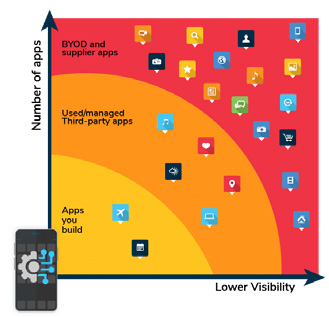
The discipline begins with a simple question: What could go wrong? Controls around cash, spending, reporting and contracts that were sufficient six months ago may prove fragile as complexity increases or funding sources shift. Daniel refers to identifying “key controls and points of failure.” Rather than waiting for breakdowns, teams test assumptions proactively.
This reset extends beyond financial controls. Quarterly objectives are revisited with the same scrutiny. Teams are encouraged to revalidate whether strategies remain aligned with market realities and the company’s evolving priorities. Prior success does not exempt current processes from examination.
The mindset also invites opportunity. If the company were starting today, what would leadership do differently? Which initiatives would be prioritized? Which assumptions would be challenged? Finance becomes a trusted business partner and a forcing mechanism to prevent complacency, thereby sharpening strategic thinking.
Shifting Growth toward Scalable Distribution
Direct sales historically drove NowSecure’s expansion. Enterprise mobile security engagements generated meaningful revenue, yet direct sales require proportional headcount increases and extended deal cycles. Each new salesperson introduces fixed cost and each large deal carries concentration risk.
Partnering with the CEO and head of Sales, Daniel evaluated growth through the lens of scalability and cost efficiency. Channel partnerships offered broader reach without equivalent internal expansion. By working with established distributors and international partners, NowSecure could access adjacent industries and geographic markets without opening new entities.
Channel engagement criteria were refined to prioritize strategic alignment. Partnerships were pursued where NowSecure’s unique mobile security capabilities materially complemented a partner’s portfolio. OEM relationships further extended reach by integrating NowSecure’s solutions and powerful data into larger platforms, making them more robust.
The shift diversified revenue sources. Dependence on individual large transactions is lessened as distribution widens. Revenue volatility is reduced, allowing more time to focus on customer success initiatives and feature enhancements.
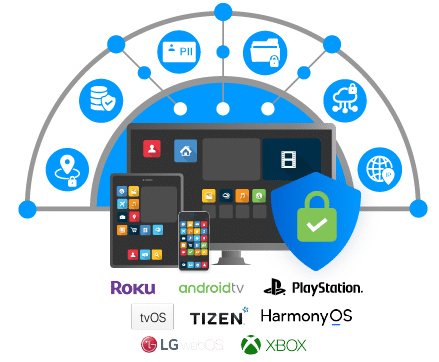
Growth under this model is measured by leverage—expanding revenue without proportional increases in fixed cost.
Finance as the Architecture of Accountability and Opportunity Identification
Beyond a vital foundation of measurement and reporting integrity, Moskowitz frames the modern finance function as moving from mechanics to insight and a disciplined approach to planning and forecasting. Clear key performance indicators are defined and communicated across departments. Managers understand how daily decisions influence enterprise outcomes. Visibility reduces speculation. Accountability becomes shared and emphasizes the importance of executing as a team.
Finance, in this model, filters throughout the organization. Definitions remain consistent. Metrics are explained, not merely reported. Joint accountability for plans and results strengthens coordination among leadership teams.
Moskowitz also emphasizes integrity as a core requirement of financial leadership. Difficult news cannot be softened or avoided to preserve comfort. Problems must be addressed directly, even when outcomes are not favorable. Transparency builds and enhances trust over time.
“Chance favors the prepared mind,” he says, referencing a principle that has shaped his orientation toward leadership at every level. Preparedness requires critical thinking, questioning assumptions, examining issues from different angles and anticipating change before it forces reaction.
For emerging finance leaders, Moskowitz advocates bringing a distinct perspective. Finance views the enterprise with analytics and objectivity, bringing a unique blend of insider and external views. That lens, when applied thoughtfully, clarifies direction and highlights tradeoffs others may overlook. Leadership credibility grows when financial insight contributes to enterprise-wide decisions rather than remaining confined to reporting.
A Financial Framework Built for Stability
At NowSecure, finance now operates as an integrated system rather than a reactive function. Stable definitions anchor forecasting. Revenue-per-employee and margin discipline align structure with output. Controls are tested before failure occurs. Growth models are evaluated for leverage rather than solely for scale.
Under Moskowitz’s guidance, finance has become the architecture supporting enterprise confidence. Decisions rely on measurable and well-reasoned discipline and debate. Risks are surfaced early. Growth pathways are evaluated for structural soundness. In a technology company navigating rapid change, that discipline does not restrict ambition. It enables it.