
Be first to read the latest tech news, Industry Leader's Insights, and CIO interviews of medium and large enterprises exclusively from Manage CFO Magazine
Manage CFO Magazine: Specials Magazine
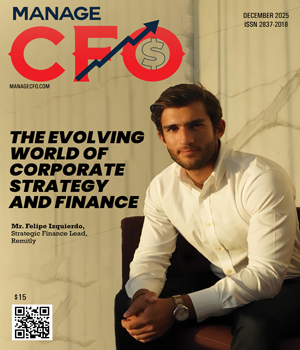
Felipe is an Angel Investor and Operator currently working on Corporate Strategy for Remitly [NASDAQ: RELY], a high growth Remittance Fintech on a mission to transform lives with trusted financial services that transcend borders. Felipe is also an experienced venture capital investor, currently a part of several VC syndicates and a judge for pitch competition meetings. His investment experience is focused on connecting emerging markets and supporting early entrepreneurs. Felipe Izquierdo built a distinguished career working in strategy for blue-chip companies privately and through Boston Consulting Group. He holds an MBA from Columbia University, which has enhanced his ability to develop and implement high-impact business strategies. Felipe has consulted for both public and private companies, leveraging his experience as an investor to drive growth and value creation across a range of industries. He has successfully applied his expertise in banking, telecommunications, private equity, NGOs, consumer goods, and other sectors, aligning strategic insights with business objectives to deliver sustainable results. In an interview with Financial Services Review, Mr. Felipe Izquierdo, Senior Manager of Corporate Strategy at Remitly, discusses the emerging trends in the world of corporate strategy and finance and shares his insights into effectively navigating them. Building a Career from the Ground Up I graduated with honors from IU University in Spain and began my career in consumer-facing private equity before transitioning to consulting, motivated by a desire to learn from top thought leaders. During my tenure at Boston Consulting Group, I developed strategies across various industries, including airlines, private equity, telecommunications and nonprofits like Save the Children. The work spanned acquisitions, digital strategies, cost optimization and fundraising.
Top Outsourced Accounting Firm 2025
Accounting firms across the globe face a pivotal moment. The days of purely transactional bookkeeping are giving way to a new era shaped by real-time insights, automation, and strategic advisory services. As firms struggle with outdated systems, talent shortages, and rising client expectations, Pacific Accounting & Business Services (PABS) stands out as a partner built for the future. At the core of the company’s value proposition is its ability to manage the full spectrum of accounting operations. PABS handles catch-up and clean-up work, reconciliations, expense tracking, and tax-ready financial statements. For firms seeking comprehensive support, PABS delivers end-to-end services covering payables, receivables, reporting, cash flow management, and general ledger maintenance. Its tax preparation and audit support capabilities further strengthen its role as an extension of its clients’ teams. A major catalyst for the firm’s recent growth is PathQuest, PABS’s proprietary technology suite designed to address the long-standing inefficiencies that limit traditional accounting models. PathQuest BI [Business Intelligence], supported by an AI boost, gives firms the ability to convert raw financial data into real-time intelligence. It provides predictive forecasting, benchmarking, and multi-entity visibility, helping accountants move upstream into strategic advisory work. PathQuest AP [Accounts Payable] modernizes accounts payable through automation, fraud detection, audit trails, and virtual card support, reducing invoice processing time by up to 80 percent..

Salesforce-Native Accounting Solution

Accounting Seed, the #1 accounting solution built entirely on Salesforce, is changing the way companies use financial data with a platform built for adaptability, speed and customer success. Natively built on Salesforce, Accounting Seed delivers CRM and accounting in a single platform, offering real-time visibility across sales, finance and operations, from first interaction to final payment. For small and mid-sized businesses (SMB), this eliminates the inefficiencies of juggling disconnected tools and manual processes. The platform also automates key workflows—most notably through its AR and AP Automation features—and delivers deeper operational insights, helping teams allocate resources more effectively. That clarity empowers businesses to do more with less, scale without the usual pains and stay focused on what matters most: growth. “One of our superpowers is just how flexible and adaptable our system is when it comes to the growing and changing needs of SMBs,” says Ryan Sieve, CTO. Unlike traditional accounting systems that are often more rigid in nature, Accounting Seed evolves with its users, adapting seamlessly to changing needs without disrupting operations. Its flexibility goes beyond setup, letting teams tailor workflows, data fields and automation without rebuilding core processes. While most financial systems enforce fixed workflows, Accounting Seed allows teams to roll out new services, adjust billing models or reorganize teams, without manual workarounds or heavy development costs. “Not all of us have unlimited resources,” Sieve adds. “We're helping put time back into their business where they can really focus on strategy, what's going to help them grow in the best way possible and take on new initiatives, new product lines, whatever that might be.” Without Accounting Seed, businesses often stitch together disconnected systems—slowing progress when they need to accelerate. A single client engagement might pass through a CRM, a project tracking platform, a billing application and finally land in accounting software. Each step is siloed, with different customer records and no easy way to connect the dots. Teams lose time reconciling data, chasing payments and bridging systems instead of focusing on growth. For lean SMB teams, these inefficiencies can be growth blockers.
Top CFO 2025

Scott Lustig is the Chief Financial Officer of AtoB, where he applies deep expertise in financial services, private equity and credit opportunities. A Wharton graduate, he combines analytical rigor with strategic insight to scale fintech innovation from San Francisco. In this interview, Scott Lustig shares how financial discipline, data-driven decision-making and cross-functional collaboration shape his leadership at AtoB. His method balances conservatism with innovation, driving sustainable growth while positioning the company at the forefront of fintech and transportation. At a Glance • Financial discipline and innovation driving sustainable growth • Data-backed decision-making for capital efficiency and scale • Finance embedded as a strategic, cross-functional partner • AI and automation enhancing credit, payments and risk management From Wall Street to Fintech Leadership I began my career in financial services, private equity and private credit at Endurance Capital, Bear Stearns Merchant Banking, Irving Place Capital, Culpeper Capital and Fortress. Because financial services companies, particularly lenders, are highly capital-intensive, I found Fortress to be an ideal platform for expanding into various areas, including senior asset-based lending and control private equity investments.

Andrew Church is a strategically focused CFO with extensive experience leading financial and operational transformations across small to mid-cap public and private equity-backed companies. He excels in driving profitability, consummating acquisitions, and reengineering key processes. A trusted strategic partner to CEOs and investors, Church has a proven track record of enhancing cash flow, optimizing performance, and delivering Increased shareholder value through disciplined execution and visionary leadership. In an exclusive interview with Manage CFO, Church shared his expertise as CFO and valuable thoughts on the importance of finance and operations. Andrew Church built his career on a simple belief. Real corporate transformation happens when financial discipline meets operational understanding. He began in New York City at a Big Four accounting firm, serving large public and private organizations as a CPA. After six years, he recognized that financial expertise alone would not create lasting business impact. He stepped away to complete his MBA in general management at Cornell, focusing on operations management and marketing to broaden his skills and prepare for senior leadership roles. Over the next 35+ years, Church intentionally pursued roles across diverse industries. He believed that the fundamentals of improving profitability, cash flow, and market share apply across sectors. His strength became guiding companies through periods of rationalization, growth, turnaround, and reinvention. He describes himself as a change agent who thrives in environments that require renewed focus, improvement and urgency. “Seek out and celebrate wins connected to strategic KPI’s — margin expansion, working capital reduction, market share growth— in order to reinforce behaviors necessary to create a sustainable competitive advantage and establish an enterprise-wide continuous improvement engine.”
CXO INSIGHTS

The Importance of Organizational Alignment: Strategy, Environmental Understanding, and Unifying Processes for Success
Michael Dotto, Director, Voya Financial[NYSE: VOYA]

Dealing with Global Tax Compliance
Sergio Vazquez, Transfer Pricing Director, CEMEX [NYSE: CX]

Championing Strategic Vendor Risk and Procurement Integration
Chris N. Phillips, VP, Procurement and Vendor Risk, Lendmark Financial Services

Recent challenges in the industry and how Internal Audit can help
Jacqueline Breslauer, Executive Vice President - Chief Audit Executive, Valley Bank[NYSE: VLY]

From Setbacks to Success: Leading the Charge in Wealth Management and Innovation
Chad Schmookler, Vice President, Special Projects, InComm Payments


IN FOCUS

Strategic Valuation: Tracking Trends in Business Worth Assessment
Business valuation evolves through a comprehensive, decision-based approach to risk analysis, technology, and intangible assets.

Maximizing Efficiency: The Value of Partnering with Outsourced Accounting Firms
Outsourced accounting firms provide expertise, efficiency, and strategic insight that lead to compliance, cost control, and long-term business planning.
EDITORIAL
Outsourcing That Drives Financial Clarity
Finance chiefs are under pressure to produce faster insights, stronger controls and leaner teams. Outsourced firms are stepping into that gap, not as back office vendors but as strategic contributors to financial resilience.
CFOs want more than transactional support. They want partners who understand the nuances of cash health, regulatory exposure and the operational drag created by fragmented systems. The leading firms respond with integrated platforms, real-time dashboards, and advisory models that connect data to decisionmaking. Outsourced accounting has become a performance lever rather than an administrative fix.
Technology plays a major role, yet the competitive edge comes from interpretation. Automated workflows reduce errors and shorten closing cycles. Predictive tools highlight risks before they become a crisis. Still, the real value is delivered by teams that can translate complex patterns into straightforward recommendations. CFOs reward partners who speak their language and deliver clarity without noise.
As organizations push for greater agility, outsourced accounting becomes a critical element of the modern finance ecosystem. Firms that advance beyond the traditional support model and operate as true collaborators will shape how the next generation of CFOs drives growth and governance.
This edition highlights the expert perspectives of Charlie House, Vice President Finance at AutoZone[NYSE: AZO], and Melissa Hall, Senior Vice President in Finance and Head of Global Tax at Assurant[NYSE: AIZ]. These esteemed professionals share their invaluable insights on developments and challenges within the sector, along with potential solutions. We hope the valuable insights from industry leaders featured in this edition will help you make informed decisions for your businesses.
