Be first to read the latest tech news, Industry Leader's Insights, and CIO interviews of medium and large enterprises exclusively from Manage CFO Magazine
A featured contribution from Leadership Perspectives, a curated forum for technology leaders, nominated by our subscribers and vetted by the Applied Technology Review Editorial Board.

AtoB
Reinventing Finance from the Boardroom to the Driver's Seat

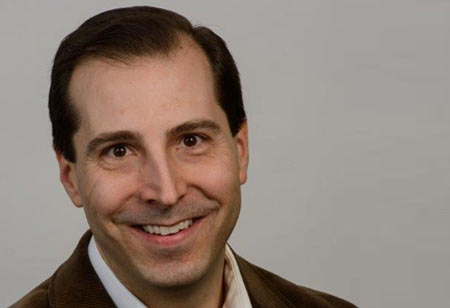
Scott Lustig
Scott Lustig is the Chief Financial Officer of AtoB, where he applies deep expertise in financial services, private equity and credit opportunities. A Wharton graduate, he combines analytical rigor with strategic insight to scale fintech innovation from San Francisco.
In this interview, Scott Lustig shares how financial discipline, data-driven decision-making and cross-functional collaboration shape his leadership at AtoB. His method balances conservatism with innovation, driving sustainable growth while positioning the company at the forefront of fintech and transportation.
At a Glance
• Financial discipline and innovation driving sustainable growth
• Data-backed decision-making for capital efficiency and scale
• Finance embedded as a strategic, cross-functional partner
• AI and automation enhancing credit, payments and risk management
From Wall Street to Fintech Leadership
I began my career in financial services, private equity and private credit at Endurance Capital, Bear Stearns Merchant Banking, Irving Place Capital, Culpeper Capital and Fortress. Because financial services companies, particularly lenders, are highly capital-intensive, I found Fortress to be an ideal platform for expanding into various areas, including senior asset-based lending and control private equity investments.
“Our goal is to invest early and do for transportation payments what Stripe, Shopify and Toast have done for their industries.”
As Managing Director, I most enjoyed working closely with the CFOs of my portfolio companies as a partner and board member. After SoftBank acquired Fortress, I wanted to return to building something from the ground up, as I had done at Endurance and Culpeper. I became CFO of ZeroDown, which raised 150 million dollars in three months with investors like Sam Altman. After selling ZeroDown to Flyhomes in 2024, I joined AtoB as CFO, where I had been an early investor and advisor.
Financial Principles that Drive Sustainable Growth
My core financial principles revolve around conservatism, analytical rigor, efficiency, foresight and transparency. Early in my career, I worked with experienced bank regulators at a private investment fund during the pre-financial crisis housing bubble, which taught me how to take a contrarian approach even to the strongest trends. While the consensus at the time was that real estate was hyperlocal and a national housing crash was impossible, we took a conservative approach by rolling up community banks with minimal housing exposure and booked profits before the downturn.
Balancing conservatism with the charge-ahead culture of a startup can be challenging. I believe that overly conservative incumbents are destined to fail. Our goal is to invest early and do for transportation payments what Stripe, Shopify and Toast have done for their industries.
At AtoB, we spent years developing a proprietary small fleet credit model, using data from fleet cash flow statements, telematics and spending patterns instead of relying on standard FICO scores. This analytical rigor gives us confidence in our risk management, capital deployment and growth.
I view debt as a strategic tool, using it to fund 95 to 100 percent of asset needs while preserving equity for long-term initiatives like R&D. The flexibility of debt capital is more valuable than its cost, enabling operational efficiency and adaptability.
This disciplined yet forward-looking approach also shapes our thinking about strategy. Strategic foresight begins with asking the right questions: what are the risks and how can we mitigate them? I encourage my team to discuss risks as openly as opportunities, as this transparency often sparks innovation. Every strong investment or idea carries risks and success depends on how well they are addressed. Our rapid growth relies on this mindset, constantly brainstorming new products and channels while structuring around potential challenges to ensure adaptability, resilience and sustainable execution.
Finally, transparency remains central to how I operate. Open communication with investors, lenders and our board fosters alignment, trust and faster collective progress toward our goals.
Converging Forces Reshaping Transportation Payments
The transportation and payments industries are converging faster than ever, and this evolution is reshaping how AtoB operates and grows. The transition from batch ACH systems to real-time payment rails is changing the way fleets manage cash flow. Drivers now expect immediate access to earnings, while shippers seek real-time settlement visibility. Built on Visa, Mastercard and RTP networks, our infrastructure enables instant transactions and positions our wallet and card products as the operating backbone of fleet cash management. This approach reduces friction, improves liquidity and replaces legacy fleet cards and banking intermediaries.
As our real-time payments infrastructure matures, it naturally unlocks opportunities for embedded lending and credit automation. Using transaction-level data and proprietary underwriting, we extend credit directly at the point of spend, allowing customers to grow efficiently.
Artificial intelligence further supports this progress by enhancing underwriting accuracy, detecting fraud and optimizing spending patterns. These advances have allowed us to nearly double revenue in the past year with only a ten percent increase in operating costs.
Building Finance as a Strategic Partner
At AtoB, I view Finance as more than a control function. It is a strategic partner and data engine that is embedded in cross-functional initiatives to shape design and decision-making from the start. We maintain unified dashboards that connect financial KPIs with product and operational metrics, ensuring every team understands how their work impacts the company’s overall performance.
During quarterly planning cycles, Finance works with Product and Operations to model trade-offs and align spend with value creation. Our real-time data systems provide instant visibility into performance trends, enabling faster action. By integrating Finance into stand-ups and product reviews, we build trust and position it as an enabler of innovation rather than a gatekeeper.
Reflections from the CFO’s Chair
For aspiring finance leaders, my message is simple: build breadth, trust and judgment. Develop a broad perspective by exploring operations, product strategy and capital markets, not just accounting.
Earn trust through calm communication, clarity and credibility when challenges arise. Strengthen judgment by staying curious and asking why things work or fail. Finance is where data meets decision-making and the most effective CFOs are those who help design the company’s future, not just measure its past.