Be first to read the latest tech news, Industry Leader's Insights, and CIO interviews of medium and large enterprises exclusively from Manage CFO Magazine
A featured contribution from Leadership Perspectives, a curated forum for technology leaders, nominated by our subscribers and vetted by the Applied Technology Review Editorial Board.

Raymond James
Building Confidence through Market Discipline
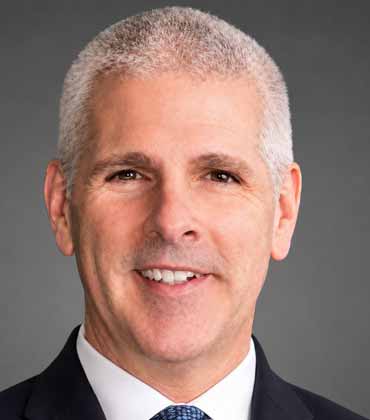
Larry Adam
Larry Adam is Chief Investment Officer for Global Wealth Solutions at Raymond James. He is responsible for investment strategy and asset allocation advice for the firm's wealth platform and has 30 years' experience in portfolio management and market research. He has a consistent focus on helping investors navigate uncertainty with disciplined decision making.
Helping Investors Separate Noise from Fundamentals
Chief investment officers face a familiar challenge. Markets may react immediately to headlines, but investors often require guidance that extends far beyond a single news cycle.
Larry Adam's role sits at that intersection. He joined Raymond James in 2018 and has since been responsible for developing investment perspectives used throughout the firm’s wealth management organization. His job is to balance economic developments, policy changes and market sentiment without losing sight of long term objectives.
His public market commentary often returns to the same principle. Short-term disruptions matter, but investment decisions work best when grounded in fundamentals rather than emotion. That approach has become increasingly relevant as investors contend with inflation concerns, geopolitical tensions and changing interest-rate expectations.
Translating Complex Markets into Practical Decisions
Financial markets have become more interdependent and less easy to understand. What happens in one place can soon affect portfolios everywhere.
Adam's background prepared him for that reality long before arriving at Raymond James. Prior to his current role, he spent decades at Deutsche Bank, eventually serving as Chief Investment Officer for the Americas and Global Chief Investment Strategist for the wealth management business.
Those responsibilities gave him exposure to global asset allocation and cross-market analysis. Now, at Raymond James, his job needs the same coordination. He helps to translate big economic trends into actionable investment advice that advisors and clients can understand and use.
Rather than focusing on predictions alone, his commentaries often emphasize preparation and portfolio discipline. The message is consistent; investors cannot control every market event, but they can control how they respond to changing conditions.
Keeping Long-Term Thinking in Focus
Volatility in the markets can create pressure to act immediately. One of the challenges for investment leaders is to keep perspective when uncertainty dominates public discourse.
Adam's leadership approach reflects the belief that resilience comes from process rather than reaction. Through regular market publications and investor communications, he provides context around earnings trends, monetary policy and economic indicators that affect portfolios.
His influence extends beyond internal strategy work. His appearances across financial media and industry events have made him a recognizable voice on topics affecting investors and advisors alike.
The scale of Raymond James adds another layer of complexity to that responsibility. Serving a large wealth management organization requires investment guidance that remains relevant across different client objectives and market environments.
Experience Built Around Consistency
Professional longevity often reveals how leaders approach change. Adam's career has been defined less by dramatic shifts and more by continuity in investment philosophy.
For those reading Manage CFO, it is an illustration that being an investing leader does not necessarily mean making accurate forecasts of the market environment. It means creating systems to make sound decisions in cases of uncertainty.
That emphasis on discipline, perspective and clear communication aligns closely with the expectations placed on today's chief investment officers.