Be first to read the latest tech news, Industry Leader's Insights, and CIO interviews of medium and large enterprises exclusively from Manage CFO Magazine

Joe Maas
Investing Beyond the One-Size-Fits-All Portfolio
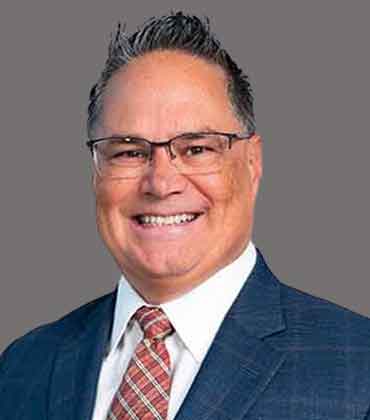
Investment management is often presented as a contest between opposites: active or passive, concentrated or diversified, risk-on or risk-off. Joe Maas has spent his career questioning whether any of these arrangements can claim a permanent advantage. Markets shift through bull, bear and sideways phases, and each changes the terms of the investment decision. As Chief Investment Officer of Synergy Asset Management, Maas believes the job is not to predict every market turn, but to understand conditions, know the client and have the right tools ready when they change. That view took shape over three decades, as successive roles steadily refined his understanding of what he owes the client.
Maas, in his early days, sold insurance for John Hancock. The broker-dealer world that followed introduced a different standard, requiring investments to be suitable for the client. Becoming a CFP and moving to a predominantly fee-only practice marked a deeper shift toward fiduciary responsibility, defined by loyalty, care and a duty to follow the client’s instructions. He sees those stages as reckonings with whom his role was ultimately meant to serve.
In 2001, Maas founded Synergy Asset Management, translating his fiduciary philosophy into a three-part model. The firm brought together investment management, business valuation and consulting, M&A and commercial real estate for business owners generating $5 million to $50 million in sales. For Maas, a business owner’s financial picture was bigger than the investment account. The business, its transactions and other assets mattered too.
Aligning Investment Decisions with Life Goals
The aftermath of the 2008 crisis exposed a basic tension in investing. Reducing portfolio risk doesn’t necessarily achieve a financial objective. While diversification and asset allocation could reduce losses, heightened risk aversion kept many investors from participating in the recovery that began in 2009.
The lesson?
Risk and return travel together, and overemphasis on avoiding volatility can leave clients safe but short of their required returns.
That perspective led Maas to distinguish between an investor’s willingness to take risk and their ability to bear it. A client can accept a risk score of 40 and still need an 8 percent return. A portfolio expected to earn 4 percent may fit the risk score while leaving the financial plan short.
“ Clients want us to flip the coin and have it land on the side they want. My job is to educate them about what risk-on and risk-off really mean and then tailor portfolios. “
The Lifestyle Return Benchmark turns that problem into a calculation. Instead of beginning with a standard portfolio, it reverse-engineers the clients’ current assets, future cash flows, taxes, spending, life events, and desired end-of-life needs to determine the required return. If capital markets cannot provide it, the solution is not financial alchemy. The client must save more, spend less or retire later.
Maas calls the ideal investment a “pink unicorn” which never loses money, stays fully liquid, and delivers double-digit returns. Real allocation chooses trade-offs that fit the client’s financial circumstances.
The Right Club for the Course
Maas is reluctant to declare one investment approach the winner in every market. He cites Eugene Fama and Robert Shiller, both recipients of the 2013 Nobel Memorial Prize in Economic Sciences, to illustrate his view that no single investment approach works in every market. The appropriate choice depends on whether the market is trending, mean-reverting or noisy.
Synergy maintains a range of portfolios, from concentrated five-to-20-stock strategies to diversified asset-allocation approaches. Maas follows the “preponderance of the evidence,” analyzing economic, fundamental and technical data alongside proprietary market-cycle, economic-cycle and factor models that shape them.
There is a practical reason for keeping that toolkit broad. Maas has often seen advisors’ personal investment biases produce identical portfolios. One client may want 70 percent risk-off and 30 percent risk-on. Another may want substantially more risk. For Maas, the investment policy statement should reflect those differences and govern portfolio building and monitoring.
Maas’ golf analogy captures the idea neatly. A golfer carries different clubs for different shots. A driver serves the tee, an iron handles the approach and a putter finishes the job on the green. The CIO’s responsibility, therefore, is to read regimes thoroughly, recognize when a strategy no longer fits and adjust without emotion.
Choosing the right tool does not eliminate risk. Maas uses an investment coin to explain the balance. A quarter can land on heads or tails, just as markets swing between risk-on and risk-off. Investors would naturally want the unattainable outcome of maximum return and no risk. The advisor’s job is to explain the trade-off and construct an allocation that fits the client and the market conditions.
But even a carefully built portfolio can unravel when emotion takes over. As an outsourced CIO, Maas has watched investors grow euphoric near market peaks and fearful near the bottom, often acting against their long-term interests. His answer is to tie the financial plan to the investment policy statement before storms.
SAAM, Synergy’s Strategically Aligned Asset Manager framework, makes that division explicit. The advisor acts as Chief Wealth Officer, integrating the client’s financial plan, while Synergy’s CIO and portfolio teams manage risk within each portfolio’s mandate. The arrangement gives clients the “parachute” before it is needed. That discipline helped clients navigate through the 2008 and 2022 downturns while avoiding ad hoc decisions under pressure.
Fiduciary Accountability in an Age of AI
AI is the newest tool entering the investment process. Machines can potentially process information and surface patterns faster, but the advisor remains answerable for the recommendation and the fiduciary duty. Maas calls the combination “augmented intelligence.”
The real test is whether advisors can understand what AI is doing rather than treating its output as a black box. The concern is already shaping Maas’s own work. He is writing his 11th book, AI Insight: Managing Money with AI, which explores augmented intelligence in investing and wealth management. He and his partners are building Tactical Mind AI to help professionals utilize better tools while retaining accountability.
The market will cycle, and investment strategies will change with it. New technologies alter the tools, while new assumptions test the old ones. Maas puts the obligation plainly. If a firm changes more slowly than the world around it, it risks decline. A CIO cannot abolish market uncertainty or rely on one optimal strategy. The task is to allocate capital intelligently, adapt to evolving conditions and live within the realities of a client’s life.