Ann Gill
The Faster Technology Moves, The More Experience Matters
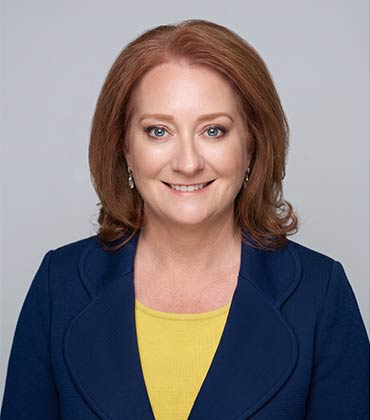
When Ann Gill joined Axos Bank seven years ago, the institution was approaching nine billion dollars in assets. Today, it has crossed $30 billion. The growth has also transformed the role Gill stepped into, expanding both the scope of her responsibilities and the demands placed on the accounting function. The bank has grown, financial services have changed, technology has evolved, and AI is reshaping how work gets done. Through it all, Gill has stayed close to the details of the operation.
She believes leaders should understand what happens in the trenches without becoming responsible for every task themselves. A former CFO once gave her a description of leadership that stayed with her. Her job, he told her, was to “do nothing, and yet do everything.” The idea was that she should not have a specific daily task that made her indispensable to a process. Instead, she should know the operation well enough to step in wherever she was needed.
That philosophy has shaped the way Gill has built accounting at Axos. Her accounting function handles the traditional responsibilities of financial and regulatory reporting, SOX, payroll, accounts payable and the close of the books. But its work extends much further, into M&A, technology projects, risk mitigation, data analytics, process improvement and developing people.
The distinction matters to Gill because she sees accounting as far broader than the traditional functions associated with the department. She compares it to anatomy in medicine, a discipline that may not draw much attention but is fundamental to understanding the larger system.
“You never stop growing. You never stop learning. Work never stops changing, so your ability to be agile and open is imperative,” says Gill.
Knowing The Work Behind The Numbers
Gill’s career across startups and Fortune 100 and Fortune 50 companies gave her perspectives on both sides of the scale equation. Large organizations had resources, while entrepreneurial environments offered a different kind of speed and flexibility. At Axos, she found a combination that suited her: an entrepreneurial culture with the resources of a larger institution.
The bank’s branchless model was unconventional when it launched more than 25 years ago, long before digital banking became familiar. For Gill, that history helps explain Axos’ long-standing appetite for technology and experimentation.
Just as important to Gill is the culture around that model. She describes Axos as an environment built around excellence, merit and an all-hands-on-deck mentality, where people are expected to contribute, and leaders remain accessible when something important needs attention. For her, that culture creates the ability to make a difference and see tangible progress in a short period of time.
That environment suits the way Gill thinks about her function. Her accounting organization is responsible for the work that has to happen every day. But alongside those teams, she has built a projects group of roughly 10 people, ranging from entry-level professionals to directors. Their mandate is different: they work on what comes next.
They may help integrate an acquisition, participate in due diligence, work with IT and AI to move an acquired business onto Oracle, develop reporting through Tableau and Python, or examine an existing process for opportunities to automate it. When a new product is being developed, the team can become involved early, helping identify accounting and regulatory implications before the product is implemented rather than discovering them afterward.
For Gill, that is where accounting demonstrates its broader value. Accounting provides financial information, but she sees its value extending into analysis, data, controls, fraud protection, risk and providing the information business leaders need to make decisions.
An automation project, for example, is not successful simply because it makes a process faster. Gill wants to know what happens when the process produces an error, where controls sit around it and how the organization will detect a problem. A new technology or AI agent may remove a manual step, but it can also create a new risk if nobody understands what happens behind the interface. Therefore, the changes in process incorporate changes in how items are reviewed as well as prepared.
Gill’s familiarity with the underlying work allows her to challenge those decisions from a practical standpoint. She may not personally perform every accounting task or approve every operational action, but she wants enough knowledge to step into a process if someone is unavailable.
That mindset is particularly useful in Gill’s role, where a carefully planned day can quickly take a different direction. She may begin a morning with 10 priorities and finish having completed only two because eight unexpected issues have taken their place. She does not regard that as evidence that planning has failed. At her level, being prepared means having the knowledge, people and systems necessary to respond when the next challenge inevitably appears.
When Technology Changes The Way People Learn
That approach is becoming even more relevant to Gill as AI changes the nature of work itself. She is enthusiastic about what the technology can do. Agents and automation could take over portions of analytical and reporting work that have traditionally required spreadsheets, presentations and significant manual effort, allowing those processes to be completed more quickly and efficiently.
But Gill rejects the idea that AI will eliminate accountants. In her view, it may create more work for the profession by raising the standard of what accountants are expected to do. Reconciliation and bookkeeping remain important parts of the profession, but they do not define an accountant’s value. An accountant must also understand why a number looks wrong, assess risk, challenge assumptions and explain what financial information means to decision-makers. If technology can take on more of the mechanics, those capabilities become more important.
“AI may produce an answer at remarkable speed, but speed does not make it accurate,” says Gill. “An incorrect output can move quickly through a financial organization before anyone recognizes the problem.”
Gill believes experienced professionals often develop something close to a sixth sense. They can look at a number or transaction and sense that something is wrong, even before they can identify precisely where the problem lies.
She attributes that instinct to years of exposure to the details of the work and to seeing how transactions fit together from beginning to end. That experience becomes particularly important as AI takes on more of the work, because accountants still need to recognize when an answer does not make sense and know when to dig deeper.
Rather than viewing the rapid automation of routine work as a threat, Gill focuses on preparing her team for an evolving challenge. As technology absorbs the repetitive tasks that traditionally built a young accountant’s foundation, organizations must find innovative new ways to train and develop early-stage team members. For Gill, proactively preparing people for this shift is just as critical as adopting the technology itself.
Axos’ accounting and finance rotational program gives entry-level employees four- or six-month assignments across different areas of the function. Instead of becoming narrowly defined by their first role, they gain a broader understanding of how accounting and finance works as a whole and integrates with other teams. Gill meets with participants during their rotations to understand how they are progressing and whether they have the support they need.
The program reflects a principle Gill has carried throughout her own career. Professionals cannot simply complete the checklist in front of them. They need to remain agile, keep learning and look three or five steps ahead, understanding what is happening in their industry as well as in their own area of responsibility.
Gill holds herself to the same standard. During her time at Axos, she has not preserved a fixed definition of the Chief Accounting Officer role. As the organization has grown, she has expanded the function with it, adding capabilities around transformation, technology and process improvement while developing people who can take greater ownership of the work.
“You never stop growing. You never stop learning. Work never stops changing, so your ability to be agile and open is imperative.”
As accounting becomes more automated, Gill believes those fundamentals will become more important, not less. The next generation of accountants will still need to understand how transactions move from beginning to end, recognize risk and question anomalies.
For Gill, the answer is not to slow technology down. It is to raise the standard of the people using it. She is building teams that can improve existing processes while pushing accounting into conversations beyond reporting and compliance. At the center of that approach is a willingness to stay open to learning and to question the answer when something does not make sense.
In a profession where AI can increasingly produce an answer in seconds, Gill believes the most valuable professional may be the one who knows when to stop and ask whether that answer makes sense and where this information can be utilized.